Project Description
Soursop (Graviola) Leaves have many uses in traditional medicine. With strong nutrient profile, it provides a variety of health benefits
Soursop (Graviola) Leaves Health Benefits
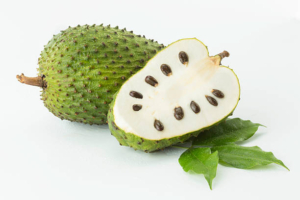
Soursop (Graviola) Leaves are high in vitamin C, an antioxidant known to boost immune health.
The Vitamin strengthens your immune system, improving its ability to defend against pathogens.
It also promotes the destruction of free radicals, which can help to protect your skin and cells from environmental oxidative damage.
One whole soursop fruit contains 215% of your recommended daily allowance of vitamin C.
What is Soursop
Soursop is the fruit of Annona muricata, a broad leaf, flowering, evergreen tree native to Mexico, Cuba, Central America, the Caribbean, and northern South America, primarily Colombia, Brazil, Peru, Ecuador, and Venezuela
Today, it is also grown in some areas of Southeast Asia, as well as in some Pacific islands. It was most likely brought from Mexico to the Philippines by way of the Manila-Acapulco Galleon trade. It is in the same genus as the chirimoya and the same family as the pawpaw (Wikipedia).
Nutritional Facts of Soursop (Graviola)
Nutritional Facts per 100g
| Calories | 66 | |
| Total Fat | 0,3g | |
| Saturated fat | 0,1g | |
| Polyunsaturated fat | 0,1g | |
| Monounsaturated fat | 0,1g | |
| Cholesterol | 0mg | |
| Sodium | 14mg | |
| Potassium | 278mg | |
| Total Carbohydrate | 17g | |
| Dietary fibre | 3,3g | |
| Sugar | 14g | |
| Protein | 1g | |
| Vitamin A* | 0% | |
| Vitamin C* | 34% | |
| Calcium* | 1% | |
| Iron* | 3% | |
| Vitamin B6* | 5% | |
| Vitamin B12* | 0% | |
| Magnesium* | 5% |
*Per cent Daily Values are based on a 8 000 kj diet. The daily values may be higher or lower depending on a person’s kilojoule needs.
Scientific Research on Soursop (Graviola) and Cancer
According to an animal study by Yan, et al. (2015), the leaves of Annona muricata, commonly known as Graviola, are rich in flavonoids, isoquinoline alkaloids and annonaceous acetogenins and confers protection against prostate cancer. Defining in vitro, in vivo and ex vivo In vitro (Latin: in glass) studies in experimental biology are those that are conducted using components of an organism that have been isolated from their usual biological surroundings in order
to permit a more detailed or more convenient analysis than can be done with whole organisms. Colloquially, these experiments are commonly called ‘test tube experiments’.
In contrast, in vivo studies are those that are conducted with living organisms in their normal intact state, while ex vivo studies are conducted on functional organs that have been removed from the intact organism (Wikipedia).
A brief discussion of the three (3) other peer-reviewed scientific papers
In a study by Torres, et al (2012) researching the anti-cancer properties of Soursop, it was found that the compounds that are naturally present in a Graviola extract inhibited multiple signalling pathways that regulate metabolism, cell cycle, survival, and metastatic properties in pancreatic cancer cells. The
study showed the promising characteristics of the natural product against this lethal disease. Dai, et al (2011) studied the effects of Soursop (Graviola) on breast cancer. Their data showed that dietary Graviola fruit extract (GFE) induced significant growth inhibition of MDA-MB-468 cells in vitro and in vivo through a mechanism involving the EGFR/ERK signalling pathway, suggesting that GFE may have a protective effect for women against EGFR-overexpressing breast cancer.
In his study, Cassileth (2008) found that Graviola demonstrated anticancer effects in vitro, but has not been studied in humans. Despite the lack of human data, many websites promote graviola to cancer patients based on traditional use and on the in vitro studies. Caution is, however, required as there is
no evidence of safety or efficacy in this regard.
Daddiouaissa, D., Amid, A., Sani, M.S.A. & Elnour, A.A.M. 2021.
Ethnopharmacological relevance: Medicinal plants have been used by indigenous people across the world for centuries to help individuals preserve their wellbeing and cure diseases. Annona muricata L. (Graviola) which is belonging to the Annonaceae family has been traditionally used due to its medicinal abilities including antimicrobial, anti-inflammatory, antioxidant and cancer cell growth inhibition. Graviola is claimed to be a potential antitumor due to its selective cytotoxicity against several cancer cell lines. However, the metabolic mechanism information underlying the anticancer activity remains limited.
Aim of the study: This study aimed to investigate the effect of ionic liquid-Graviola fruit pulp extract (IL-GPE) on the metabolomics behavior of colon cancer (HT29) by using an untargeted GC-TOFMSbased metabolic profiling.
Materials and methods: Multivariate data analysis was used to determine the metabolic profiling, and the ingenuity pathway analysis (IPA) was used to predict the altered canonical pathways after treating the HT29 cells with crude IL-GPE and Taxol (positive control).
Results: The principal components analysis (PCA) identified 44 metabolites with the most reliable factor loading, and the cluster analysis (CA) separated three groups of metabolites: metabolites specific to the non-treated HT29 cells, metabolites specific to the treated HT29 cells with the crude ILGPE and metabolites specific to Taxol treatment. Pathway analysis of metabolomic profiles revealed an alteration of many metabolic pathways, including amino acid metabolism, aerobic glycolysis, urea cycle and ketone bodies metabolism that contribute to energy metabolism and cancer cell proliferation.
Conclusion: The crude IL-GPE can be one of the promising anticancer agents due to its selective
inhibition of energy metabolism and cancer cell proliferation.
Kridis, W.B., Mnif, A., Khmiri, S., Toumi, N. & Khanfir, A. 2021.
Purpose: The use of complementary and alternative medicine (CAM) is common among breast cancer patients, but less is known about whether CAM influences breast cancer survival. The primary aim of this study was to determine the impact of self-use of herbs on the overall survival.
Methods: This was a prospective study including 110 patients with breast cancer. All patients were questioned about the concept of taking herbs. We analyzed the demographic data and the overall survival.
Results: The average age was 51 years (30-80 years old). 37 had metastatic disease (33.6%). 48 patients had taken plants (43.6%). 19 patients consumed Graviola (39.6%) and 29 Alenda (60.4%). Overall survival at 3 years and at 5 years were, respectively, 96.2% and 82.4% in the absence of plant
consumption versus 78.5% and 78.5% in case of plant consumption (p = 0.015).
Conclusion: This study concluded that self-medication with Graviola or Alenda may be associated with an increase of death risk in patients with breast cancer. Further studies are needed to confirm these results.
Chan, W-J. J., McLachlan, A.J., Hanrahan, J.R. & Harnett, J.E. 2020.
Objectives: Annona muricata, also known as graviola, soursop and guanabana, has been widely utilised for the treatment of a range of cancers. The mechanism of action and the efficacy of A. muricata and its constituents in the treatment of cancer have been comprehensively reviewed. The aim of this systematic review was to summarise the available literature that reports on factors related to the safety and tolerability of A. muricata leaf extract and its acetogenins.
Methods: In-vitro, preclinical animal studies and human studies of any design written in any language were included. Studies that evaluated A. muricata leaf extract and its constituents were searched through the databases Pubmed, Medline and Embase from inception to April 2019. The elaborated item 4 of Consolidated Standards of Reporting Trials statement and Animals in Research: Reporting In vivo Experiments guidelines were used to evaluate the quality of the studies.
Key findings: The results suggest that A. muricata and its constituents have hepatoprotective, neurotoxic, antinociceptive, anti-ulcerative and chemopreventive effects. The dose and duration used in animal studies demonstrating toxicity may not directly translate into the effects in humans. Studies
included in this review were judged to be of medium to high quality.
Conclusions: The overall outcome of the current review suggests that A. muricata has a favourable safety and tolerability profile. Future studies investigating its use in people diagnosed with a range of cancers are warranted
Claims Made in Support of Soursop’s Ability to Treat Cancer
The following anti-cancer claims are listed on various websites regarding Soursop (Graviola):
- Cures cancer – by eating the fruit of soursop helps to attack the cancer cells safely and naturally without side effects such as nausea, weight loss or
hair loss - Increases immune response – substances contained in soursop fruit such as acetogenins, annocatacin, annocatalin, anno-hexocin, annonacin, annomuricin, anomurine, anonol, caclourine, gentisic acid, gigantetronin, linoleic acid, muricapentocin, make the body kill malignant cancer cells
- Soursop leaf can kill malignant cells for 12 types of cancer, including colon, breast, prostate, lung and pancreatic cancer
- Soursop is 10 000 times stronger in slowing the growth of cancer cells compared to adriamycin and chemotherapy
- Soursop leaves is very effective for cancer of the prostate, pancreas and lung
- Soursop attacks cancer cells effectively because it does not harm healthy cells
- Soursop does not cause extreme nausea, weight loss and hair loss
Naik, A.V. & Sellappan, K. 2020.
Purpose: The present study evaluates the in-vitro anti-tumorigenic potential of leaf methanol extracts of Annona muricata (LMAM).
Materials and methods: The cytotoxic activity was assessed in MCF-7 cells by MTT assay at various concentrations ranging from 25-250µg/mL. MCF-7 cells were treated with 50 and 100 µg/mL LMAM for 24 h. To detect LMAM-induced apoptosis; Hoescht 33342 staining along with Cell cycle analysis, Annexin-PI probe as well as oxidative stress damage by reactive oxygen species (ROS) measurements were determined using flow cytometric analysis. While caspase-3 expression levels were studied employing the qRT-PCR method.
Results: LMAM exhibited significant inhibition of MCF-7 cells with an IC50 value of 85.55 µg/mL. Hoescht staining showed marked morphological features characteristic of apoptosis in LMAM treated cells. Cell cycle analysis confirmed the proven capability of LMAM showing a 30% rise in G1 phase upon treatment with 100 µg/mL LMAM, thus inducing cell cycle arrest at G1 phase and a rise in sub G0-G1 population paralleled with a decrease in S phase. Flow cytometric analysis with Annexin V-FITC-PI staining indicated an increase in the early and late apoptotic population with a 3.38% and 19.47% rise respectively when treated with 100 µg/mL LMAM. Treatment with 100 µg/mL LMAM caused an increase in intracellular ROS with MFI value 3334.08. Upregulation of caspase-3 was observed with a 2.18 and 32.47 fold increase compared to control in MCF-7 cells cultured at 50 µg/mL and 100 µg/mL LMAM respectively suggesting caspase-dependent apoptosis.
Conclusion: LMAM proved as a potent ethno-chemopreventive agent and a potential lead in cancer treatment attributable to the synergistic interactive properties of phytoconstituents.
Warnings Against Graviola
The following warnings against graviola have been made recently by reputable scientists, scientific groups and institutions:
- Cancer Research UK does not support the use of graviola to treat cancer. Their advice is to be very cautious about believing information or paying for any type of alternative cancer therapy on the internet (Cancer Research UK).
- Extracts of graviola show antiviral, antiparasitic, antirheumatic, astringent, emetic, antileishmanial and cytotoxic, antinociceptive, anti-inflammatory, antihyperglycemic and anticancer effects in vitro and in vivo. However, human data are lacking. Alkaloids extracted from graviola may cause neuronal
dysfunction and degeneration leading to symptoms of Parkinson’s disease. - Some side effects follow from graviola’s areas of bioactivity. Studies on animal subjects have demonstrated that the plant can dilate blood vessels and lower blood pressure, so those whose blood pressure is already low, or are already on medication to reduce hypertension, should consult their physician before taking graviola (Wright). Also, a large dose taken at one time can cause nausea and vomiting.
- Graviola’s purported anti-cancer potency comes largely from its ability to reduce the supply of adenosine triphosphate (ATP) to cancer cells. ATP often provides metabolic energy to healthy cells as well, and some nutritional supplements, notably Coenzyme Q10, are known for increasing ATP. For this reason, CoQ10 may neutralize the effect of graviola and they should not be taken together.
FDA Warns Against Soursop (Graviola)
In April 2017, the Food and Drug Association (FDA) sent out warning letters to 14 companies, advising them to change or remove the fraudulent claims regarding Graviola on their websites. The FDA forwarded warning letters to all companies selling/distributing Graviola because unsubstantiated claims are made that Graviola can cure cancer. The FDA warned that if the companies do not comply, the FDA may take further legal action to prevent their products from reaching consumers.
The Position of the Cancer Association of South Africa (CANSA)
While CANSA does not dispute the fact that Soursop (Graviola) may demonstrate anti-cancer properties in laboratory tests, that it may have a protective effect for women against EGFRoverexpressing breast cancer and that it shows promising characteristics of fighting cancer cells and providing protection against prostate cancer (in vitro), it cannot at present, advance or promote the use of Soursop (Graviola) in any form for the treatment of cancer until there is sufficient scientific evidence of its safety and efficacy in this regard until such time as additional peer-reviewed research has been published in support of the anti-cancer properties of Graviola.
CANSA further believes that individuals who intend to use Graviola, in whatever form, should discuss
this with their treating physician prior to using Graviola.
Medical Disclaimer
This Fact Sheet and Position Statement is intended to provide general information only and as such, should not be considered as a substitute for advice, medically or otherwise, covering any specific situation. Users should seek appropriate advice before taking or refraining from taking any action in reliance on any information contained in this Fact Sheet and Position Statement. So far as permissible by law, the Cancer Association of South Africa (CANSA) does not accept any liability to any person (or his/her dependants/estate/heirs) relating to the use of any information contained in this Fact Sheet and Position Statement.
Whilst the Cancer Association of South Africa (CANSA) has taken every precaution in compiling this Fact Sheet and Position Statement, neither it, nor any contributor(s) to this Fact Sheet and Position Statement can be held responsible for any action (or the lack thereof) taken by any person or organisation wherever they shall be based, as a result, direct or otherwise, of information contained in, or accessed through, this Fact Sheet and Position Statement